Saturday, 14 March 2015

TYPES OF SHOTS IN FILM MAKING

                          Film making is the combination of number of sectors. Each sector involves number of activities. Shot division is one of the main task in film making which is highly responsible in presenting the film accurately. 
Before learning about the types of shots, first let us see a slight introduction about the shot.
In film making, we'll come across few terms which are the combination of one another.

They are as follows:

Movie                - Combination of number of sequences
Sequence           - Combination of number of scenes
Scene                 - Combination of number of shots

So, Shot is the smallest unit of the movie.

While preparing a scene, shots will be prepared by keeping the content of the scene and the duration of the film in view. Less number of shots may not convey all the content of the scene more perfectly and more number of shots may increase the time duration of the film. So, maintenance of the shots must be made accurately while writing the screenplay.

Now, let us learn about the types of shots in film making.


    Establishing Shot    

This is the introduction shot of the film. While beginning the scene, 3 elements should be kept in mind. They are the location, mood of the scene and the cast. All these 3 will be initiated in a single shot.

Below displayed image and videos collection gives us a brief idea about the establishment shot.


Collection of Establishing Shots  :

Courtesy : Youtube


    Long Shot    


In this shot, the location and the subject will be highlighted from a long distance as shown here.


Referring this video gives us a brief information about the types of long shots.

Courtesy : Youtube


    Full Shot    

This shot covers the object from head to foot as shown below.


Here are few full shot videos


    Mid Shot    

This covers half portion of the body as shown here.


Courtesy : YouTube


    Closeup Shot    


This shot covers from top of the head to the shoulder part or much more closer. It's actual motto is to cover a particular area of the subject closely.


Courtesy : You Tube


    Extreme Close Up    

This shot gives a detailed view of a particular area. It is even more deeper than the close up shot. 
Here are the examples of the extreme closeup shot.


Courtesy:You Tube


These are the different shots used in film making. Though there are number of theories regarding the proper usage of shots in particular methods, the presentation of the film completely depends on the vision of the film maker.

**********

Friday, 13 March 2015

How to choose the BEST CAMERA for SHORT FILMS

                            It's a known fact that we can never expect the best output without the best ingredients. Similarly, even in film making, the features of the camera used plays an important role in achieving the best. In order to the best, one have to invest the best which is not generally possible in case of SHORT FILMS. So, it is a wise step to choose the best camera which gives the best quality at the reasonable price.

First of all, before going to the list of the cameras, first we'll try to know a bit about the 2 popular terms which we come across and they are, SLR and D SLR.
what are they???

SLR camera :   This is the short form of "Single-Lens Reflex camera." Here, a mirror and a prism system is used which facilitates the photographer to view the image which he wants to capture through the lens which is not happened in the viewfinder cameras. So, here the photographer will be more accurate on what he is shooting and how the output would be. where as in the other pathfinder cameras, this can't be achieved and so, there will be a bit of difference between the photo and the reality.

D SLR Camera : This is the short form of " Digital Single-Lens Reflex camera." In this digital camera, both the optics and the mechanisms of SLR camera are combined with the digital image sensor. Primarily, there will be a difference in the reflex design scheme of the D SLR cameras when compared to the other digital cameras. In recent 2000s, there is a wide replacement of SLR cameras with D SLR. As per the survey of 2014, D SLR remained as the most common interchangeable lens camera in use.

    BEST SHORT FILM CAMERAS                                                                                                    

Generally, for feature and high budget films, the cameras which are presently in use are RED and ARRI.

But, while coming to the short films, the capital is low and the use of a costly camera is not suggested. So, according to the survey done by interviewing number of short film makers, it was known that
SLR and D SLR cameras are used according to the effort they can make.

Here are the few best cameras which are the best for making low budget films.


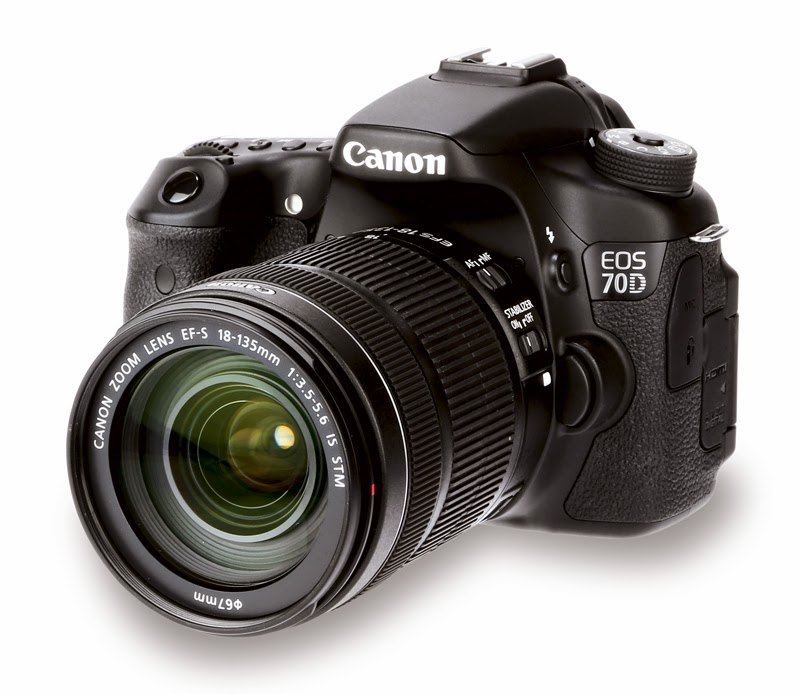
  CANON EOS 70D                                  


FEATURES

Brand                                   : Canon
Model                                   : 70D
Model Name                           : EOS
Item Weight                           : 1.9 Kg
Product Dimensions                 :13.9 x 7.9 x 10.4 cm
Item model number                   : 70D
Memory Storage Capacity        :4 GB
Resolution                           : 20.2 megapixels
Screen Size                           :3 Inches
Optical Zoom                           :5 X
Digital Zoom                           :10
Max Resolution                   :20.20 Megapixels
Optical Sensor Resolution        :20.2 Megapixels
Min Focal Length                   :35 Millimeters
Batteries Required                   :Yes
Flash Modes Description   : E-TTL II autoflash


DEMO VIDEO OF CANON EOS 70D


  Nikon D810                                                   


FEATURES

Brand                                 : Nikon
Model                                 :1542
Item Weight                         : 980 g
Product Dimensions         :14.6 x 8.2 x 12.3 cm
Batteries                                 : 1 Lithium ion batteries required.
Hardware Interface                 : AV
Resolution                         : 36.3 megapixels
Screen Size                         :3.2 Inches
Has Image Stabilization          :No
Optical Zoom                         :1 X
Digital Zoom                         :46 X
Max Resolution                 :36.3 Megapixels
Optical Sensor Resolution      :36.3 Megapixels
Max Vertical Resolution         : 4912 Pixels
Max Shutter Speed                 :1/8000 Seconds
Min Shutter Speed                 :30 seconds
Min Focal Length                 :28 Millimeters
Batteries Required                 :Yes
Continuous Shooting Speed   :5
Viewfinder Type                 :Optical (tunnel)
Has Audio Recording         :Yes
Has Auto Focus                 :Yes
Has Self Timer                        :Yes


DEMO VIDEO OF NIKON D810


   Canon EOS 5D    


This is a bit costlier than the before mentioned cameras and more professional too. It has a series which is termed in the form of marks; Mark 1, 2,3 & 4 which are nothing but the upgrading forms of the versions.


FEATURE

Brand                              : Canon
Model                              : EOS 5D Mark III Kit (EF 24-105 IS)
Model Name                      : EOS Digital
Item Weight                      : 948 g
Product Dimensions      : 15.2 x 7.6 x 11.6 cm
Removable Memory      : CompactFlash, SDHC
Resolution                      : 17 megapixels
Screen Size                      : 3.2 Inches
Display Type                      : TFT colour, liquid-crystal monitor
Has Image Stabilization      : Yes
Optical Zoom                      : 5 X
Aspect Ratio                      : 1.55:1
Max Resolution              : 17 Megapixels
Horizontal Resolution      : 5760 Pixels
Optical Sensor Resolution   : 17 Megapixels
Max Vertical Resolution      : 3840 Pixels
Min Shutter Speed              : 1/8000sec. to 30secs.,
Min Focal Length              : 24 Millimeters
Batteries Required              : Yes
Metering Description      : Evaluating metering with the image sensor (still photos) / Center-                                                           weighted average metering (movies)
Has Auto Focus              : Yes
Has Builtin Light                 : No

Has Self Timer              : Yes

Click Here for complete details 


DEMO VIDEO OF CANON EOS 5D MARK III


Note :  It may be dramatic to say. But it is true that, an efficient "eye" of a human being is much more talented than an efficient camera. The output always depends upon the vision of the photographer primarily which can bring the best with a little. So, it is important for a film makers and the photographers to know the techniques and the methods of using the cameras as creative as they can.


**********


Wednesday, 11 March 2015

How to make a SHORT FILM?

                      Now-a-days, number of people are showing a vast interest in watching and making short films.. people are interested in exhibiting their creative talent to the public through social networking channels and by many other means. working hard for many days on a short film is not the only thing which is required. Any work without having any theoretical and practical knowledge cannot fetch us a desirable result. So, it is very important for the person to know the basic rules and regulations while stepping into practicality. 

Film making is a very vast subject. But, in order to make a short, few basic tips and steps are enough.

 3 steps of FILM MAKING  

The process of making any film involves 3 steps.

  1. Pre Production
  2. Production
  3. Post Production
A best result can be achieved if all the 3 steps are performed properly. And now, let us know something about those.

 Pre Production 

Pre production is the theoretical process about the films. All the work done before entering into the field work (shooting of the film) is said to be the pre production work.
In this session, tasks like Story Writing, Screenplay, Dialogues, story board preparation, Cast and Crew recruitment etc. This is the blue print of the movie which has to be shot.


 Production 

This is the practical step of the film making process. All the pre production will be pictured as best as the team can do. There are number of works involved even in this process like directing, acting, cinematography, choreography and many other things. When coming to the short films, Cast, Direction and camera departments are almost sufficient as the additional assets like dance, fights etc. are rarely used. 


 Post Production 

This is the final and most important step. Once when the shooting part gets completed, the rushes(clips which were shot) will be sent for the post production team. Here, works like Editing, Titling, Animation, Color Correction, Music, Dubbing etc.

(Note: This is just the overview of the basic film making.)


       Key points to be kept in mind while making a short film       
   

  • Film length should be less than 40 mins according to the academy of motion pictures and sciences.
  • Feature films and high budget films will first think of a story and then estimate a budget for that. But, in the case of short films, it is suggested to first think of a budget according to one's capability and then prepare a subject according to that.
  • It is really difficult for the makers to express the entire content in a narrow time duration. But that's the challenge to do it. So, the screenplay must be sharp and accurate. Any unwanted junk or lag in the film may finally gives a bad result.
  • If the capital invested here is low, we can't expect the best technical values. But we must carefully use them to get as best as we can.
  • Better to avoid the copy contents such as music and videos from other sources because it may lead to copyright issues. Powerful social networking sites like      YOU TUBE will sense the pirated content and that may cause some issues which shows a bad impact on the project.
  • More care should be taken in both pre and post production works to get the best output.
  • Care should be taken to avoid any shot duration to go beyond 14 seconds each. i.e; no shot must exceed the duration of 14 seconds. There is a scientific reason behind this. Human eye will blink for every 12 seconds on an average. So, if a shot last for more than that (14 secs. approx.), it causes monotony. Monotony means, a viewer will feel a bit bored by seeing a shot of same angle without any movement.


Tuesday, 10 March 2015

What is a SHORT FILM??? (Before making.., learn a bit...)

Short films... Short films... Short films...

It's one of the common passion in number of youngsters all over the world. Every camera holder is dreaming of making out a short film and showcase his vision to this world. Every person with basic sense of creativity is thinking of developing a short film and exhibit it in social networks.

BUT....,

Only few of them are worthable but the rest are not...

WHY???

That's not because of the lack of talent..
It's just because of the lack of knowledge...
YES... Just because of the lack of some basic idea of FILM MAKING.

First of all, what's the definition of a short film???


As indicated by the meaning of the Academy of Motion Picture Arts and Sciences, a short film is a unique movie that has a running time of less than or equivalent to 40 minutes, including all credits. The credits, here means the titles. It might likewise termed as SHORT SUBJECT or  FEATURETTE, which  are the terms utilized as a part of the American film industry to assign a film whose length is generally three film reels, or around 24–40 minutes in running time.


At the same time, as per the CBFC of India (Central Board of Film Certification),  any film of length more than 2000 meters ( 35 mm ), i.e., over 70 minutes is long or Feature film and  movies which are not as much as that are Short Films.


In celluloid form, film is measured in length (meters or mm).


In Video form, film is measured in length of time (minutes).